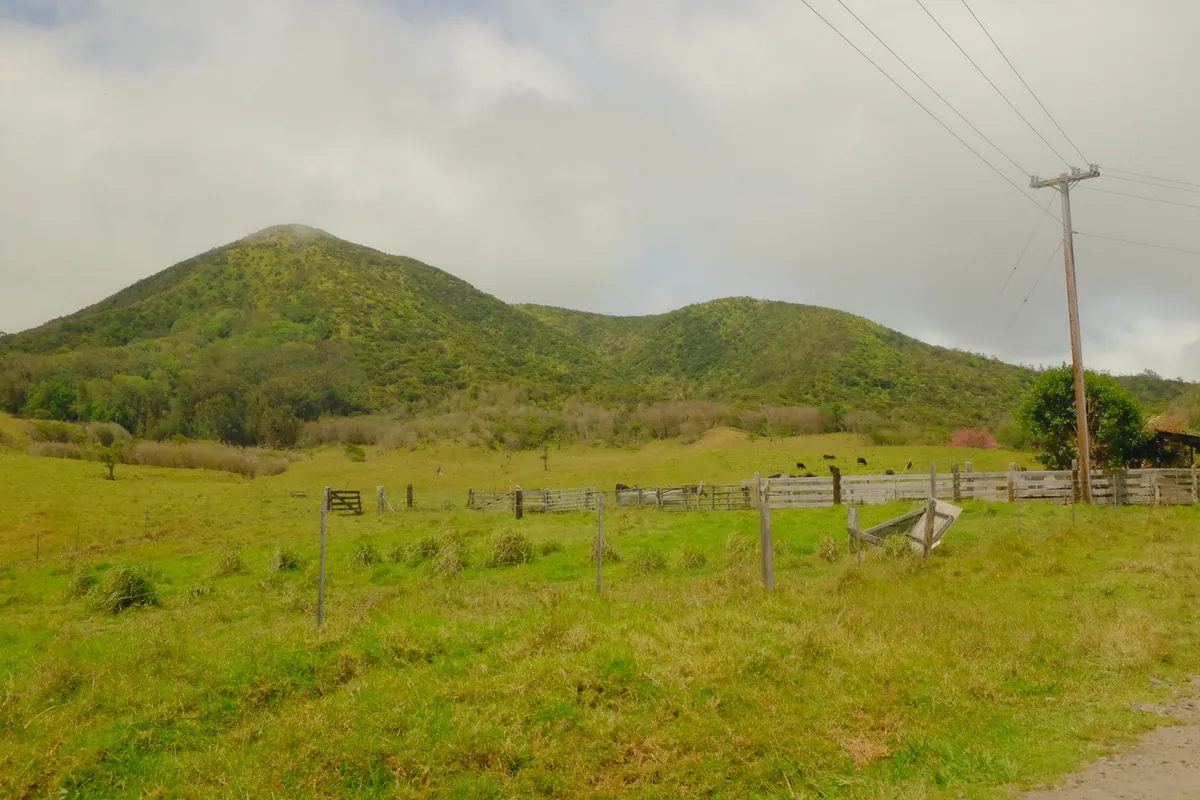
Buying a home on the Big Island.
Your first place, more room for the family, something smaller, or a move from one side of the island to the other. Here's how I help people who already live here buy, with the programs and loan basics taken straight from official sources.
Not lending or legal advice. This is a plain-language summary of public program rules as I found them on October 23, 2026. Programs, limits and rates change. A lender decides what you qualify for, so confirm everything with a lender and the program itself before you rely on it.
Jump to: First home · Moving up or downsizing · Buying and selling at once · VA loans · Moving across the island · Talk it through
1. Your first home: help worth knowing about
HHFDC Hale Kamaʻāina Mortgage Program
The state's Hawaiʻi Housing Finance and Development Corporation (HHFDC) runs this program, formerly known as Hula Mae. It offers a 30-year fixed-rate loan, financed with tax-exempt bonds, with a rate HHFDC targets at least 0.50 percentage points below market. You apply through a participating lender, not HHFDC directly.12
- A U.S. citizen or resident alien, a bona fide Hawaiʻi resident, and at least 18
- A first-time buyer: no ownership interest in a principal residence in the past three years (veterans and buyers in targeted areas can be exceptions)
- The home will be your principal residence, occupied within 60 days of closing
- Homeownership counseling through a HUD-approved agency (below)
- Within the income and purchase price limits for Hawaiʻi County (table)
| Non-targeted area | Targeted area | |
|---|---|---|
| Household income, 1–2 people | $126,500 | $151,800 |
| Household income, 3 or more | $145,475 | $177,100 |
| Maximum purchase price | $613,662 | $750,031 |
- Down payment help is being updated. HHFDC says Act 214 (2026) changed the program's second mortgage for down payment help, and its administrative rules must be amended before the updated terms take effect. Ask HHFDC or a participating lender what's available right now.12
- Property rules: homes with an ADU aren't eligible; leasehold needs at least 35 years left on the lease, with lease rent fixed for at least 10 years; the program can't be used to refinance.2
- Recapture tax: a federal recapture tax can apply if all three happen: you sell within nine years, your income has risen above the limits, and you sell at a gain.2
- Contact: HHFDC, [email protected], (808) 587-0578.1
HHFDC's Mortgage Credit Certificate program isn't taking new applications; its page covers existing certificate holders only.3
Homebuyer education (HUD-approved counseling)
A HUD-approved counselor can walk through your budget, credit and readiness before you shop, and the Hale Kamaʻāina program requires it. HUD's list for Hawaiʻi includes:4
- Hawaiian Community Assets, Hilo branch: 1315 Kalanianaʻole St., Hilo · (808) 934-0801 · pre-purchase counseling and homebuyer workshops
- Hawaii HomeOwnership Center (Honolulu): 1259 Aʻala St., Suite 201 · (808) 523-9500 · pre-purchase homebuyer education
Check HUD's list for current agencies and whether they offer remote sessions.
FHA loans
FHA-insured loans allow a down payment as low as 3.5% for borrowers with a credit score of 580 or higher; scores from 500 to 579 are limited to 90% financing (10% down). The home must be your primary residence, and gifts and approved down payment assistance can count toward the down payment.56 FHA loans also carry mortgage insurance premiums; your lender will show you what they add to the monthly cost.
USDA guaranteed loans
USDA Rural Development's Section 502 guaranteed loan offers 100% financing (no money down) for low- and moderate-income households buying a primary residence in an eligible rural area. Household income can't exceed 115% of the area median, the loan is a 30-year fixed, and you apply through a USDA-approved lender. Much of this island is rural, but eligibility goes address by address, so check the home on USDA's eligibility map.910
Other programs that may apply
- Section 8 voucher holders: the County Office of Housing and Community Development's Homeownership Option Program can let Housing Choice Voucher participants put their voucher toward a home. Rules include being a first-time buyer, putting at least 3% down (1% from your own funds), and meeting employment and income requirements. Offices in Hilo and Kona; (808) 959-4642.11
2. Moving up or downsizing
When you already own here, your current home is part of the plan. The numbers to get first:
- What your home would sell for. A free market analysis from recent nearby sales, and a realistic net after your loan payoff and selling costs.
- What the next home really costs each month. Mortgage, property tax with the home exemption, insurance by lava zone, power, and HOA or catchment upkeep. The true monthly cost calculator does this with current County and Hawaiian Electric rates.
- What you want to change. More bedrooms or land; or single-level living, less yard and a shorter drive to town or the doctor. Write the must-haves down before we look.
- The same checks as any purchase. Lava zone, insurance, fee simple vs. leasehold, cesspool or septic, and county water vs. catchment (see the full checklist).
If you've owned a principal residence in the past three years, HHFDC's first-time buyer program generally won't apply, but FHA, VA and USDA don't list being a first-time buyer among their requirements.1579
3. Buying and selling at the same time
There's no single right order. Each path trades some certainty for some convenience, and which ones are open to you depends on your lender and your finances. In general terms:
- Sell first. You know exactly what you have to spend and you won't carry two homes. The cost is a possible move in between: renting short-term, or negotiating time to stay after closing (a rent-back), if the buyer agrees.
- Buy first. You move once and on your schedule. You'll need to qualify with both payments, or use short-term financing such as a bridge loan or a home equity line of credit on your current home. These carry their own costs and risks, so get a lender's written numbers first.
- Make your purchase depend on your sale. A sale contingency protects you if your home doesn't sell, but it can make your offer less attractive than one without it, and some sellers will accept one only with conditions, such as the right to keep marketing their home.
- Line up both closings. Back-to-back closings can work when both sides cooperate, but closing dates can slip. Build in a cushion.
I'll help you weigh these against the market in your areas, and price and time your sale around the home you want next.
4. VA loans
If you're a veteran, service member, National Guard or Reserve member, or an eligible surviving spouse, a VA-backed purchase loan is worth a close look.78
- Start with your Certificate of Eligibility (COE). It confirms to your lender that you qualify for the VA home loan benefit, You can request it online, through your lender or by mail.
- No down payment as long as the price isn't higher than the home's appraised value.
- No private mortgage insurance (PMI) or FHA-style mortgage insurance premiums.
- A one-time VA funding fee may apply, plus the lender's interest and closing costs.
- You must live in the home, and meet VA's and your lender's credit and income standards.
VA doesn't list being a first-time buyer among its requirements, and HHFDC's program also makes exceptions to its first-time buyer rule for veterans.71
5. Moving across the island
Hilo to Kona, Puna to Waimea, Kona to the upcountry: a move of an hour or two can change the weather, the house you need and the monthly bills. Before you pick a neighborhood:
- Compare the areas side by side. Elevation, rainfall, temperature, lava zone and drive times for twelve areas are on the area comparison, with guides for Hilo, Puna, Kailua-Kona, Waimea and more.
- Not sure which side fits? The neighborhood match quiz scores your answers on rain, elevation and lava comfort against those areas.
- Re-run the monthly cost. Insurance by lava zone, catchment upkeep and air-conditioning use change from one side to the other. Use the calculator with real addresses.
- Move your home exemption. File a new Claim for Home Exemption (RP Form 19-71) for the new home; the form authorizes the County to cancel your previous exemption and apply it to the new parcel. Report any change in use (such as renting out the old home) to the assessor within 30 days.1312
FAQ
Do I have to be a first-time buyer to get help?
For HHFDC's Hale Kamaʻāina Mortgage Program, generally yes: HHFDC defines a first-time buyer as someone who hasn't had an ownership interest in a principal residence in the past three years, with exceptions for veterans and targeted areas. FHA, VA and USDA don't list being a first-time buyer among their requirements.
Can I buy my next home before I sell this one?
Sometimes. It depends on whether a lender will qualify you with both payments, or whether a bridge loan or home equity line makes sense for you. The other routes are selling first and renting in between, or making an offer that depends on your sale. Talk to a lender early; I'll help you weigh what each option does to your offer.
Is there a Hawaiʻi County down payment grant?
I didn't find a general County down payment grant when I checked. The County's Homeownership Option Program is for Section 8 Housing Choice Voucher participants. HHFDC's down payment second mortgage is being updated under Act 214 (2026), and HHFDC says new rules must be adopted before the updated terms take effect.
What happens to my home exemption if I move across the island?
The exemption is for the home you own and live in. When you move, you file a new Claim for Home Exemption (RP Form 19-71) on the new home, and the form authorizes the County to cancel your previous exemption. Ask the Real Property Tax Office about timing for your situation.
Not lending, legal or tax advice. Hayden Fennoy is a REALTOR® (S) with eXp Realty, not a lender, attorney or tax professional, and doesn't decide eligibility for any program. Program terms, limits and fees reflect the cited sources when checked on October 23, 2026 and can change. Confirm with the program, a licensed lender and your own advisors.
Sources · checked October 23, 2026
- HHFDC, Hale Kamaʻāina Mortgage Program: eligibility, income and purchase price requirements (eligibility as of Sept. 4, 2026; limits as of June 13, 2026): dbedt.hawaii.gov
- HHFDC, Hale Kamaʻāina Mortgage Program for Homebuyers: Frequently Asked Questions (updated Sept. 4, 2026): dbedt.hawaii.gov
- HHFDC, Mortgage Credit Certificate: current MCC holders (no new applications): dbedt.hawaii.gov
- U.S. HUD, HUD-approved housing counseling agencies in Hawaiʻi: apps.hud.gov
- U.S. HUD, FHA Myths vs. Facts (3.5% minimum down payment; gifts and down payment assistance): hud.gov
- U.S. HUD, Mortgagee Letter 2010-29 (FHA minimum credit scores and loan-to-value): hud.gov
- U.S. Department of Veterans Affairs, VA-backed purchase loan (last updated Jan. 7, 2026): va.gov
- U.S. Department of Veterans Affairs, How to request a VA home loan Certificate of Eligibility (COE): va.gov
- USDA Rural Development, Single Family Housing Guaranteed Loan Program (Section 502): rd.usda.gov
- USDA, property and income eligibility site: eligibility.sc.egov.usda.gov
- County of Hawaiʻi Office of Housing and Community Development, Homeownership Option Program (Section 8 HCV): housing.hawaiicounty.gov
- County of Hawaiʻi Real Property Tax Office, Homeowner Program (home exemption): hawaiipropertytax.com
- County of Hawaiʻi Real Property Tax Division, RP Form 19-71, Claim for Home Exemption (rev. 10/2024): hawaiipropertytax.com
Talk it through.
Tell me where you are now and where you'd like to be. I'll come back with honest next steps, including the lenders' questions to ask first, and send you homes that fit from the MLS.